- The Learning Lab
- Posts
- A study plan to CRAM in 24 hours.
A study plan to CRAM in 24 hours.
Without iPad, minimal practice questions, zero flashcards.

Toan Truong
November 05, 2023

Masterclass Read time: 7 minutes
Welcome back, 1333 readers, to the Learning Lab.
A weekly newsletter that helps you build your learning systems and become lifelong learners
🧠 Brain Warmup
(A question, riddle, or conundrum to mull over)
Q: “I have keys but no locks, I have space but no room,
You enter my realm but never leave soon.
I'm a portal of words, a gateway to thought,
Where stories unfold and ideas are sought.
What am I?"
A quick shoutout to a few people who solved last week’s puzzle.
Q: What 5-letter word typed in all capital letters can be read the same upside down?
The answer was ”SWIMS”.
Shoutouts to Andrew Innis, Abraham Lawal, Stephan Drake, but I want to give a special s/o to Jimmy Rova, who sent me a lovely message:

Thank you everyone ❤️
To get a better reading experience, use Versify to chat with this newsletter:
(p.s. Reply back to me if you have any thoughts or feedback on this)
Now back to the newsletter…
Oh no, I remember that I have an exam in 24 hours. What should I do?
This is the worst position I can put myself in.
But it does leave me thinking: if I have an exam in 24 hours that I totally forgot about, no iPad, without any AI software, a study partner, very limited practice questions, and zero flashcards...
Just me, my textbook, a few questions, and Google—what would I do?
The rest of this newsletter is going to answer this exact question.
Let’s go! 🚀
Before I give you the study plan, there are 5 things you must understand, or else the plan won’t work.
1. Setting the expectation
You won’t get an A+—maybe not even a B.
You are leaving this to the last minute, and you must understand the chance of failing is much higher than a good score.
Next, since you have a limited timeframe, you must understand that you won’t be able to cover all the information provided, but instead, you should focus on the most “important“ concepts.
For now, just set up your desk to avoid distraction, hide your phone, or whatever you need to do. We are about to enter the study war zone, and we need all of your participation.
2. The cramming mindset
As I said before, we must cram effectively.
Not everything is important; our role is to focus on the 20% that would give us 80% meaning. You will need at least 3 - 4 hours to implement this study plan, so block this out on your calendar.
Side notes: Cramming is underrated when done right. So if you have the time, here’s a good video on using cramming to learn faster.
(The most important part starts at 4:19)
3. The encoding vs retrieval cycles
Learning has 3 cycles, encoding and retrieving cycles, and re-encoding.
1. Encoding: Hardwire the information into your brain
2. Retrieval: Recall information to find what you forgot
3. Re-encode: Encode what you've forgotten.

While it takes months or years to improve encoding, retrieval is straightforward
So for all the gurus who recommend that flashcards or practice questions are the “BEST“ option, they are mistaking the forest from the tree.
These methods may help the retrieval, but they ignore the encoding process.
“Like a leaking bucket, encoding is pouring water into the bucket and retrieving is covering the holes so water can’t escape. Even with the best encoding, preventing all the leaks is impossible.”
If you want to learn more about this concept, I have pasted the link in the visual below.
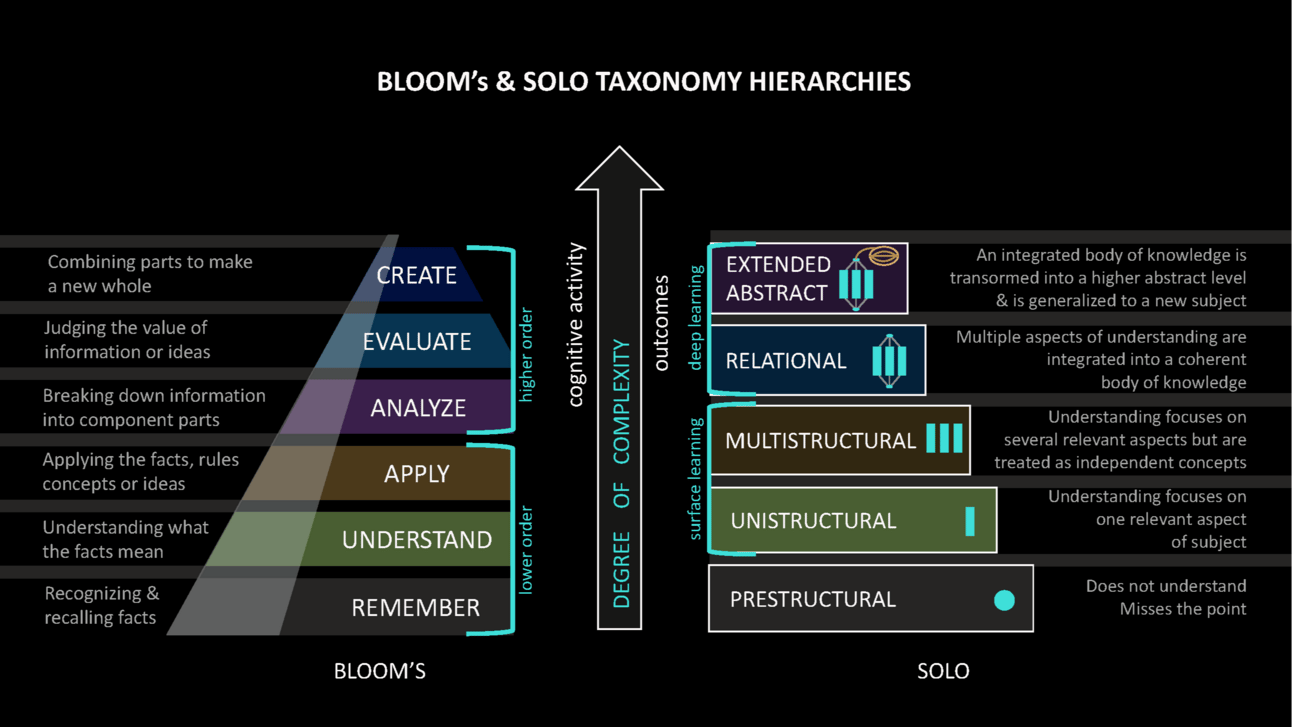
4. The Bloom and Solo Taxonomy
Bloom Taxonomy: When you analyze and evaluate, you can skip over memorizing and understanding.
Solo Taxonomy: More connections = Better knowledge structure = Better understanding of concepts.
Bloom Taxonomy is the tool that creates the Solo Taxonomy
If you're interested, I’ve also linked to another article on Bloom and Solo Taxonomy.
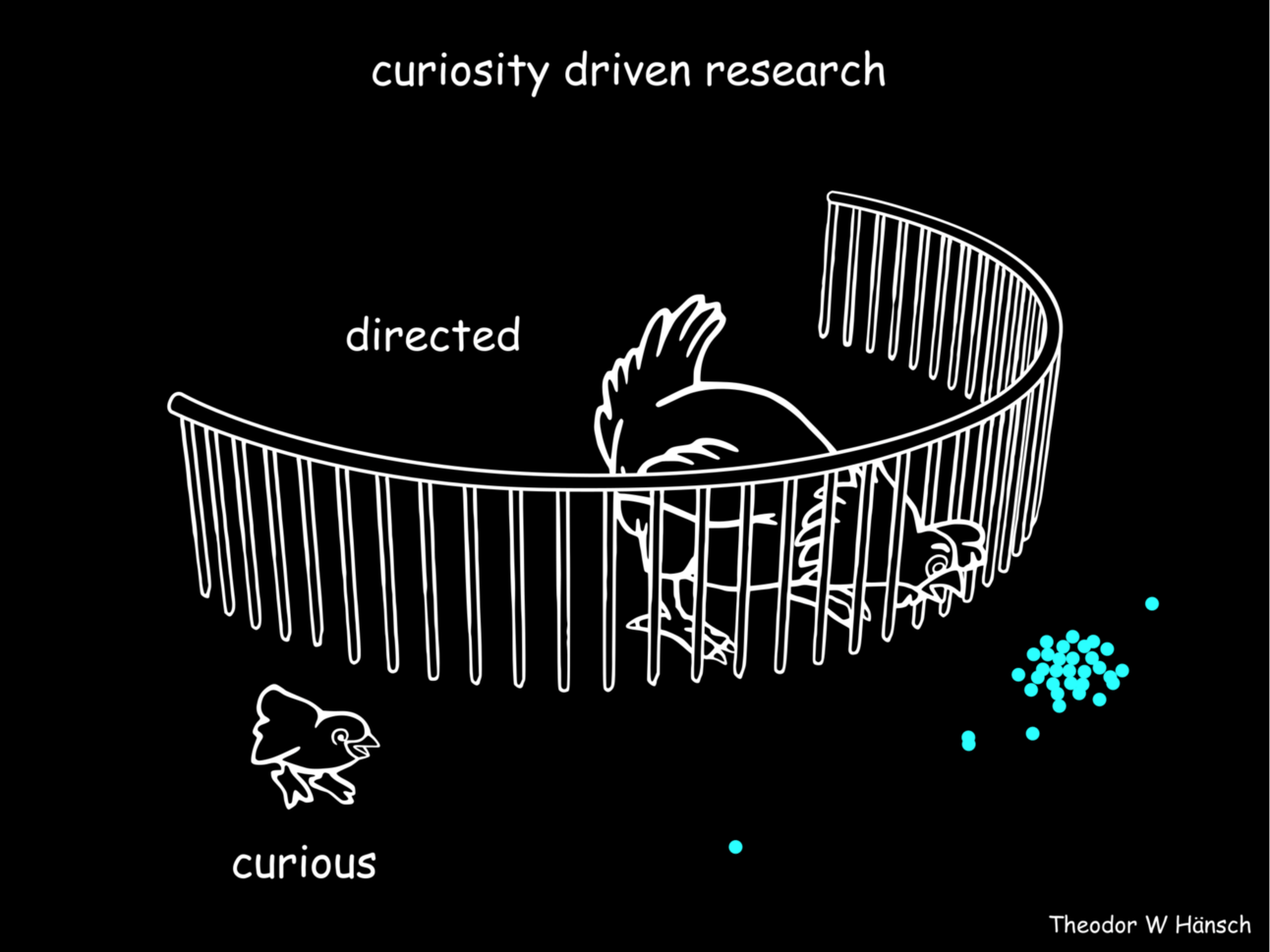
5. The power of curiosity
You don’t have to learn from cover to cover.
Instead, jump to parts most relevant to you or that you are curious about.
Start listing out all the questions you have on the topic before you dive in.
Here’s a great podcast on the power of curiosity.
Now that you understand these principles, it’s time for the study plan.
This plan is not bulletproof, and it’s built on most of the principles laid out above.
The 7-step study plan:
1. Locate resources
Whatever you have, we can deal with that.
For this plan to work you just need a textbook. Or having Google and you’re good to go.
Physically, you will need a few pieces of paper and a pen. If you don’t have an iPad. Personally, I like to use a drawing board + a stylus.
2. Finding the 80/20
We must apply the 80/20 to our cramming.
Instruction: skim through all your materials, from your notes to your textbook; we just want to pick out anything you think might be important.
Then list all of the keywords.
For now, you can use intuition when deciding. (If you have ChatGPT or AI, you can ask it to give you a list of keywords, key ideas, or key concepts related to X)
Then, think about how the words are related.
And try to map it out on the page.
Remember to re-organize the keywords so that they fit YOUR way of understanding.
When mapping it out, juggle between different structures because this process is higher-order thinking (Bloom Taxonomy)
3. Force curiosity
Curiosity is our greatest procession. As we grow older, we lose that tenacity and intrinsic desire to explore the world around us.
So the better solution is to continue to ask questions, dive into the whys, and encourage your children to go on their adventures.
I also like the idea of first principle thinking; by understanding the nuts and bolts, we can become original thinkers.
I wrote more about this here:
Elon Musk dedicated his success to First Principles Thinking.
Not just Musk — Jeff Bezos, Peter Thiel, James Clear, and Feynman too.
Here's what it is, how to use it, and how to master it:
— Toan Truong (@LearningToan)
2:03 PM • Aug 16, 2023
4. Focus on relationships
Don’t try to memorize the information.
Just focus on the relationships of how the ideas are related and how things are connected in the bigger picture.
How do we know that we have enough relationships?
You won’t. So continue asking the questions, searching for the answer, and repeating the cycle.
As a rule of thumb, the question that examines the most relationships is the best.
5. Analyze past papers
Great! Now that you understand and know how to think about the subject — let’s analyze past papers.
Since we have only a few practice papers, we have to be very intentional with how we use them.
Instruction: Imitate the testing environment. Try to answer the question altogether. Just because you ”feel” like you know the right answer doesn’t mean you do. After you answer a question, only partially look at the answer to see if you’re right.
Moreover, looks for patterns in past papers:
How were they structured?
What types of question is regularly used?
This helps with our awareness, but still, prepare yourself for the curveballs.
When you run out of questions — make your own.
Try to mix a lot of variables and create a curve ball question to test yourself.
Afterward, you may try to teach the concept to an imaginary friend or use some more retrieval practices in my other newsletter here:

6. Be self-aware of problems
After getting an answer wrong ask yourself these types of questions:
Was this a silly mistake, a gap in my understanding, or a wrong procedure?
What about my thought process that caused this mistake?
What do I need to learn or change in order to prevent this mistake in the future?
Take your time to reflect on these questions. This is part of the learning process, and this will help reveal a lot of gaps which allows you to re-encode.
7. Self-management tips
Now, the exam is probably 10 or 12 hours away.
You’re stressed and want to cram in some extra studying, but for now, sleep.
This is related to sleep memory consolidation, and nothing enough sleep will reduce your cognitive performance, focus, and memory, which are all important for the exam.
Here’s a podcast I love about sleep:
🎯 Summary
5 principles before we start:
Setting the right expectation
The cramming mindset
The encoding vs retrieval cycles
The Bloom and Solo Taxonomy
The power of curiosity
The 24-hour Study Plan
Locate resources
Finding the 80/20
Force curiosity
Focus on relationships
Analyze past papers
Be self-aware of problems
Self-management tips
I hope you enjoyed this newsletter!
Good luck with your exams.
Stay curious scientist,
Toan.
⚠️ Disclaimer
I am not a learning coach (yet).
My techniques are mostly based on my experience and the research that I have done.
So please be conscious while applying these methods.