- The Learning Lab
- Posts
- A simple system to learn new skills quickly.
A simple system to learn new skills quickly.
Great for adults, suitable for students.

Toan Truong
September 12, 2023

Read time: 10 minutes
Welcome back, readers, to the Learning Lab.
A weekly newsletter that helps you build your learning systems and become lifelong learners
Everyone tells you to "learn new skills."
But no one actually shows you how.
After 127+ hours of practising and improving my techniques
I created a simple system for learning skills faster and easier:
No tools needed.
No experience needed.
Useful even if you only have limited time.
To add spice to this, let’s tell a story…
Once upon a time, Devin was a 34-year-old working the 9-5 grind at a corporate giant, juggling kids and responsibilities.
His job pays well, but inside he feels adrift.
Deep down, Devin dreams of becoming a master copywriter
Devin's paralyzed by:
Lack of time.
Information overload.
Feeling inadequate to learn the skill.
His usual routine: watch YouTube videos, take notes, practice, and repeat.
While there is nothing wrong with this approach, there is a much better way to learn.
This system works for students, too, but here's the kicker:
1. Professionals require less rote memorization compared to students.
2. Professionals must reach higher levels of mastery beyond facts and stats
I define mastery as reaching the level of conscious competence in the 4 stages of competency.
After 2–3 weeks, we can expect improvement in our reasoning and conscious understanding.
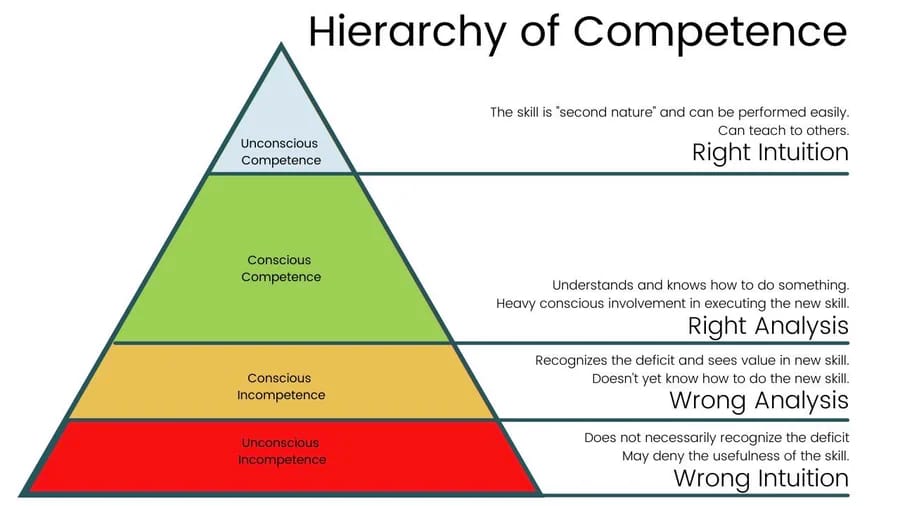
Here's the system:
1. Identify the skill
2. Finding the leverage points
3. Integrated learning
Let's begin
Identify the skill
Question: "What is the most useful skill that would put you in the best position if you mastered it?"
Choose one skill and focus on it.
Devin decided to focus on copywriting.
If you struggle to find that skill, I recommend this video about reverse goal-setting (especially section #2)
2. Finding the leverage points
Information is a network of connections
From the Pareto principle of 80/20, we understand that 20% of information can provide 80% of the meaning.
Find 2–5 credible sources as your initial launch board
Quickly skim for anything important:
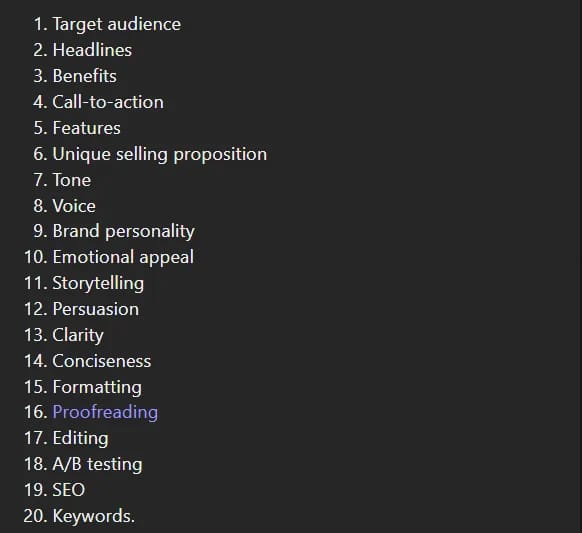
Keywords, key ideas, concepts, charts... and list them down
From there, ask open-ended questions about the importance of concepts to create the knowledge schema.
Something like this...
Analogy: See learning as building a house.
A great house starts with a well-constructed plan.
Which derived from assessing the moving parts and briefly locating each component.
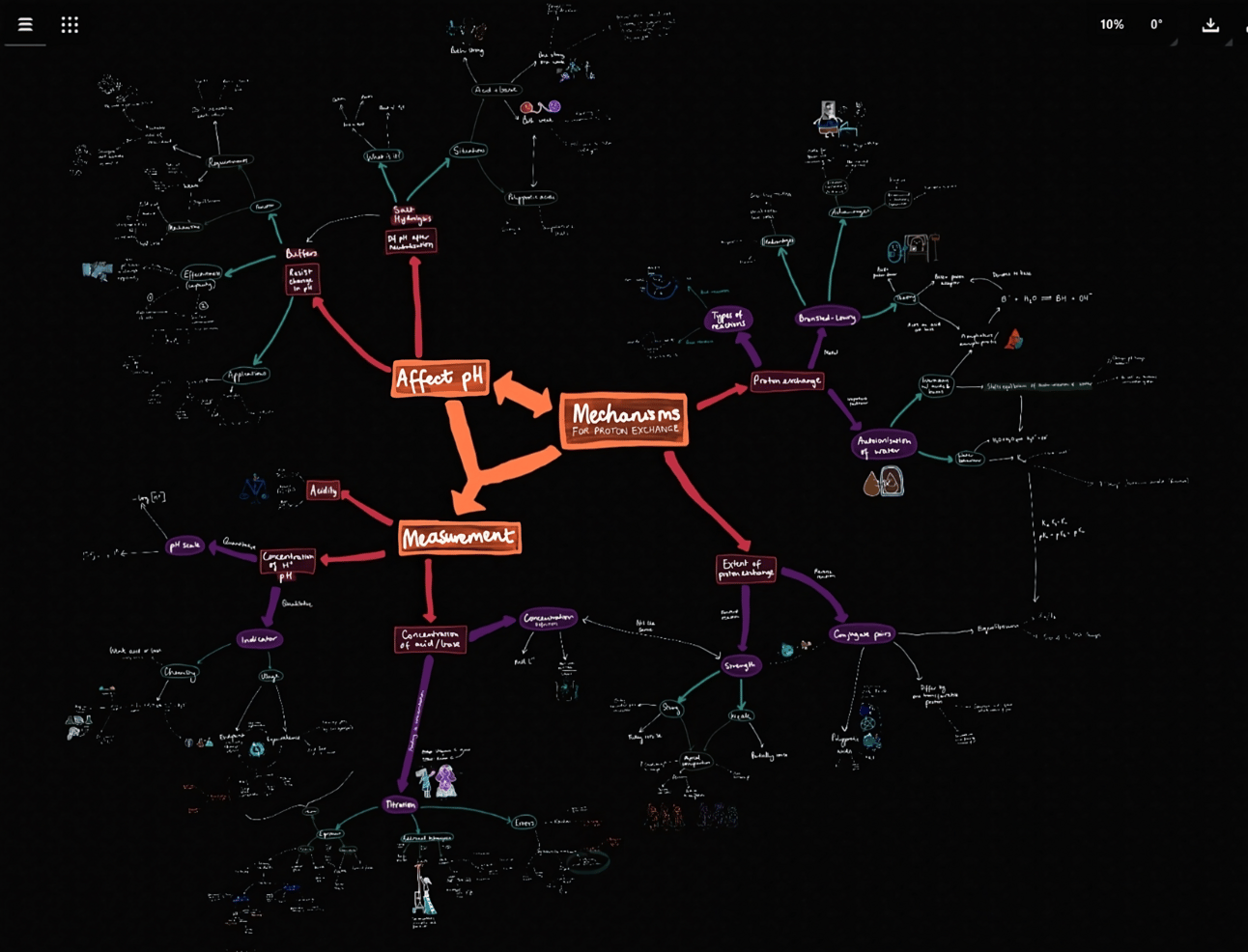
After you ask the questions and map out the topic, you will get something like this:
3. Integrated learning:
Once you have the backbone, it's time to start learning the theory.
The theory provides the framework for thinking.
To engage, look at what you drew and ask questions that follow your curiosity
Devin put this into practice.
Instead of watching YouTube videos, Devin started by thinking about the problems he was trying to solve.
From there, he used Ctrl+F for specific parts of the videos or asked ChatGPT.
Here’s an underrated free AI Chrome extension that lets you talk to YouTube videos:
When you feel like you have "learned enough to be useful," it's time to take action.
There are 2 scenarios here.
Your learning is related to work
Your learning is not related to work
We will address both; feel free to skim to your part:
Your learning is related to work
You're in luck, this puts you in the best position to integrate your learning.
Action step:
Ask for feedback
Seek challenges to use the skill
Use time at home to learn the theory
Learn things that solve specific problems you are facing.
This helps you avoid or minimize spaced repetition and allows highly effective learning.
Your learning is not related to work
Use micro-learning sessions to apply and retrieve information.
5–10 minutes while commuting on the train, waiting for coffee, or between tasks are ideal for learning.
During these sessions, you can try a few things:
Teach the concept to someone
Rethinking your understanding of concepts
Explore a single branch you're passionate about.
Mix it up with multiple retrieval techniques…
Try the Feynman technique, making videos, writing blogs, drawing, or making flashcards to reinforce your learning.
Back to the story:
Devin gets creative.
On transit, he listens to an audiobook about copywriting, scribbles out his own, and rethinks what he knows.
After work, he teaches copywriting to his wife — and before sleeping, he reads copywriting books to his children.
Not before long, Devon became complacent with his skills and worked for free to get further experience before becoming a full-time copywriter.
🎯 Takeaway
Be strategic about what skill to learn.
Spend more time learning the theory of your skill.
Use your pocket of time for microlearning activities.
Mix it up with multiple topics of learning.
🧠 Brain Puzzler
(A question, riddle, or conundrum to mull over)
What is unusual about the following words: revive, banana, grammar, voodoo, assess, potato, dresser, uneven?
Congratulations to Ondřej Šmída, who was the first person to solve last week’s puzzle.
“A sundial has the fewest moving parts of any timepiece. Which has the most?“
The answer was ”the hourglass ⌛️ ”.
⚠️ Disclaimer
I am not a learning coach yet.
My techniques are mostly based on my experience and the research that I have done.
So please be conscious while applying these methods.