- The Learning Lab
- Posts
- "I am not a math person", now what?


Read time: 4 minutes
Welcome back, 1228 readers, to the Learning Lab.
A weekly newsletter that helps you build your learning systems and become lifelong learners
I suck at math.
I remember my early days in middle school, when math seemed like a foreign language.
I struggle to wrap my head around memorizing equations and formulas, feeling overwhelmed and defeated.
“How can my friend do it so effortlessly while I am left scratching my head in confusion?”
As time went on, my struggles got worse.
My grades were okay, but it felt like I was sinking into a sea of numbers and symbols.
In other words, I had knowledge gaps.
Things got so bad that in 7th grade, my parents had to hire a math tutor for me.
Yes, I had a tutor.
But here’s the strange part:
In school, I had two types of math:
Vietnamese national approval maths
The British IGCSE and A-level maths
I struggled with Vietnamese math but excelled at IGCSE math.
And I think I know why…
The problem wasn't with math itself, but with how I was learning it.
Let me explain…
For Vietnamese math, I was under the impression that memorizing equations and answering endless practice questions was the best practice.
This works in the short term but worsens the long-term pain.
As it turned out, math isn't about memorization.
Math is about conceptually understanding concepts and then applying them to solve problems.
When I started approaching math conceptually, things changed.
I started to understand the logic behind the formulas and equations.
And without memorizing the formulas, I can make my own hypotheses.
So enough with my story…
Here are some tips to improve your math skills:
Focus on having a conceptual understanding.
Why:
Math has two parts: theory and practice.
Most people spend almost all their time on practice questions, but if you have a strong knowledge base, you can reason like a mathematician. This means you can:
Use first-principle thinking
Solve curveball questions with ease
Remember more and more aha moments
If you are new to first principle thinking, I wrote this last week:
Elon Musk dedicated his success to First Principles Thinking.
Not just Musk — Jeff Bezos, Peter Thiel, James Clear, and Feynman too.
Here's what it is, how to use it, and how to master it:
— Toan Truong (@LearningToan)
2:03 PM • Aug 16, 2023
How:
Ask, "Why is the concept important?" when learning a new topic.
Ask, ”How is this relevant, and what problem can this solve? Have you seen this before?“
These questions provide you with an understanding of the topic and highlight connections, making it more memorable.
Be smart with your practice questions
Why:
Quality > Quantity. By being strategic about how you approach practice questions, you will get these benefits:
Solve 5–10 variants of the questions (or even more)
Save time and do fewer practice questions
Intentional practice gets you faster growth compared to mass practice.
How:
Choose practice questions that align with what you are learning or struggling with. This will help reinforce your understanding of those specific concepts.
Start with your weakest link. The exam room is not the time to find your knowledge gaps.
Even if you think you can solve it, do it. The experience helps you reveal mistakes faster.
Don't just focus on getting the right answer. Focus on having the right way of thinking.
Mix up your practice with different forms of revision: teaching, scenarios, group discussions, mindmap brain dumps, etc.
Have a self-reflection practice. Here is a good one for you:
Self-reflection practice
Why:
Develop self-awareness and gain insight into your way of thinking
Track your progress and celebrate your achievements
Save time and become more efficient.
How:
Set up a self-reflection routine. You can set one at the end of the session or one every time you feel the struggle.
Ask yourself these questions:
What about my way of thinking created these mistakes?
What step-by-step did I follow? → How might this have affected you?
What is a 1% improvement I can use in my next practice?
How will I apply this new improvement to my next practice?
As a rule of thumb: If you ever feel uncomfortable, overwhelmed, or confused, then you are on the right track.
I don’t want to overwhelm you with tips.
Start with these, and you’ll have a strong foundation for growth.
🎯 Takeaway
Math is a trainable skill
Math is about conceptualizing and solving problems, not memorizing formulas.
Be strategic with your practice questions
Have a self-reflection practice for intentional growth.
Conclusion: Embrace the Journey
Most students tell me they are not “math people.“.
And I disagree.
Math is a skill and a way of thinking.
And like every skill, you can train it.
With the right approach and mindset, anyone can become a great mathematician.
Remember, it's not about memorizing formulas but understanding concepts.
Embrace the journey and enjoy the process.
Good luck, my scientist friend!
🧠 Brain Puzzler
(A question, riddle, or conundrum to mull over )
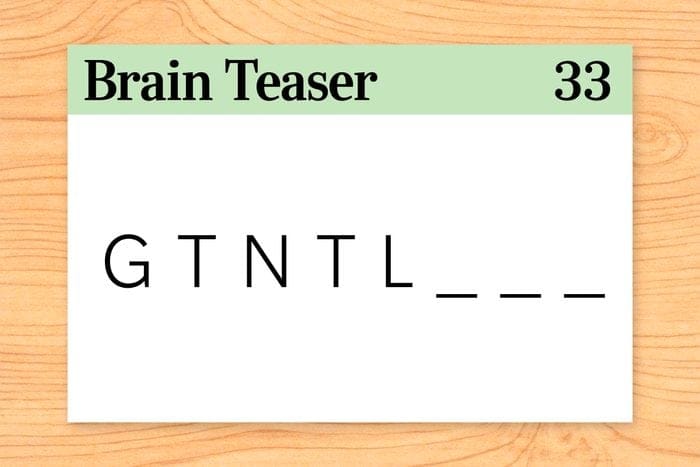
Guess the next three letters in the series GTNTL.
Quickly reply and I will feature you in the next issue 😉
Congratulations to Haroon Farhan and Ondrej Smida for solving the last week (oops I meant 2 weeks ago) puzzle.
“What is 3/7 chicken, 2/3 cat, and 2/4 goat?”
The answer was ”Chicago”.
😁 Life Update
Most interesting thing about last week
I am back again. The last few weeks haven’t been great for me. Work is catching up with me and it’s quite difficult to put in the time to write like this. A newsletter like this requires 1–2 hours of writing, and some weeks I procrastinate with it.
The most interesting thing about my recent week?
Fixed my laptop
Hired my cousin as my Twitter intern
Hop on a great call with Charlotte to discuss learning science
An AI project I am working on has had a few breakthroughs
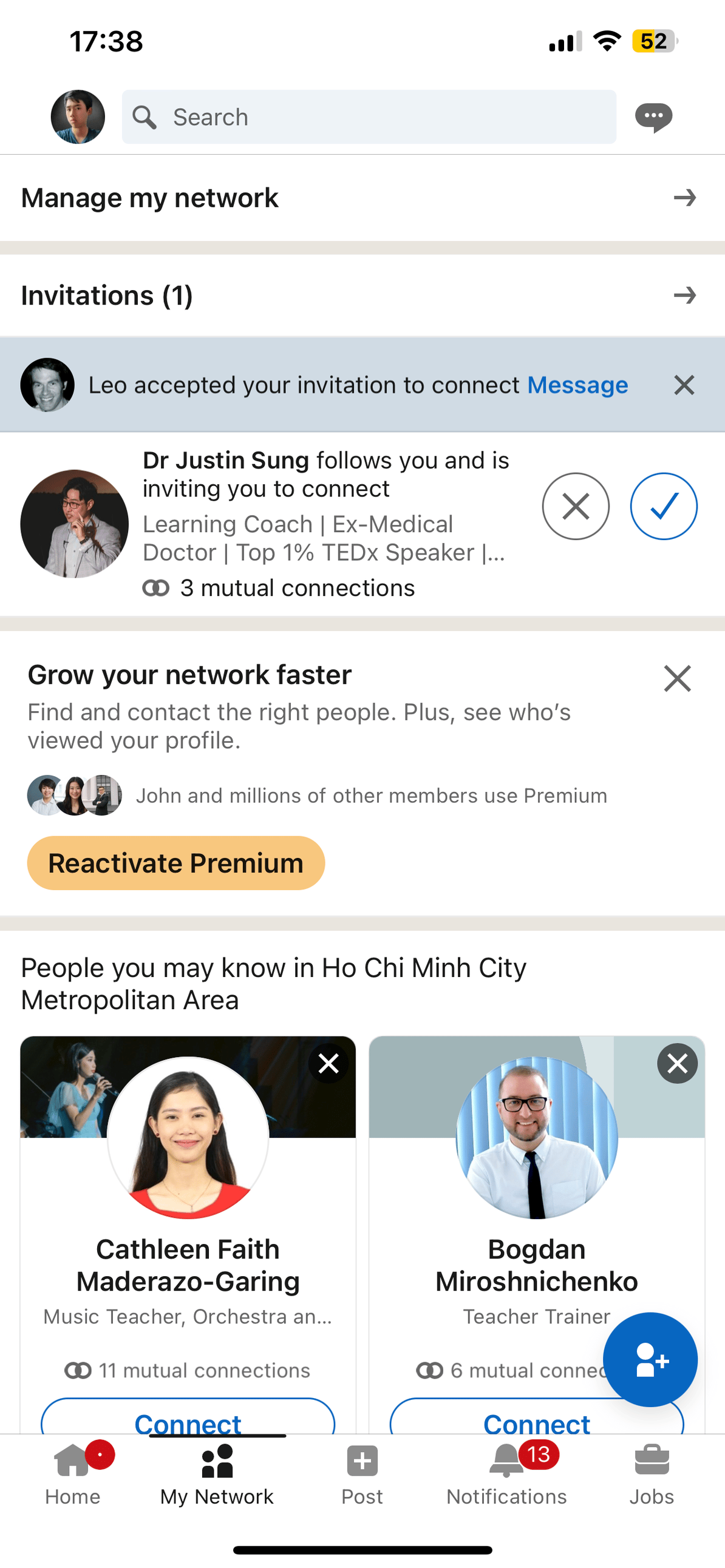
Got a connection request from Justin Sung on Linkedin 😆
My plan for the upcoming week
My sister is going back to school tomorrow, and this marks the end of my summer vacation.
I want to get on track with my Icanstudy course. I must. It’s my point of ultimate leverage.
Other than that, ghostwriting service, AI projects, and just getting back on track with life.
Time to roll.
Any other interesting facts
I spent $3,200 on a Twitter coach in the last 14 days.
I have expectations for it.
But let’s see how it goes.
That’s all for now.
Happy learning, everyone 📚️
⚠️ Disclaimer
I am not a learning coach (yet).
I don’t have the perfect system
I haven’t experienced it with students.
I haven’t dug much into the research paper and theories
My techniques are mostly based on my experience and the limited research that I have done.
Please consult with a professional learning coach at Icanstudy for more assistance. 😇