- The Learning Lab
- Posts
- Can you ever become a master? 😳
Can you ever become a master? 😳
A post on Mastery. Deliberate practice. Video tapes.

Toan Truong
July 17, 2023

Read time: 7 minutes
Welcome back, 1177 readers, to the Learning Lab.
A weekly newsletter that helps you build your learning systems and become lifelong learners
If you want a roadmap to mastery, continue reading:
The 4 Stages of Competence:

The 4 Stages of Competence is often associated with Maslow but were developed by Martin W. Broadwell in 1969.
Mastering this gives you:
1. The path to learning skills faster
2. The toolkit for technological advancement
This newsletter covers
What are the 4 stages?
Why are the 4 stages important?
The Mental models for self diagnosis?
How can we advance?
This newsletter is relatively long (5-10 minutes), so star this if you don’t have time now.
Stage 1: Unconscious Incompetence (Ignorance)
The unknown unknown.
When learning any new skill, this is our starting point.
You are unaware of problems and don't recognize the importance of improving
Stage 2: Conscious Incompetence (Awareness)
"Criket, I suck. Time to start learning."
You gained self--awareness of your ability and understood the difficulty of the skill.
Stage 3: Conscious Competence (Learning)
"I know what I am doing."
You perform tasks, but you are still aware of how you perform them.
Semi-pro level.
Stage 4: Unconscious Competence (Mastery)
"Uhm, it's hard to explain; I just do it."
Associated with the state of flow and peak performance mastery
The skill is now wired in your subconscious
Example: Walking, breathing, drinking water, brushing teeth
To learn more about the 4 Stages, watch this video:
Why is it important?
A reality check for your confidence
Commonly referred to as the Dunning-Kruger Effect, confidence without experience is just mediocre.
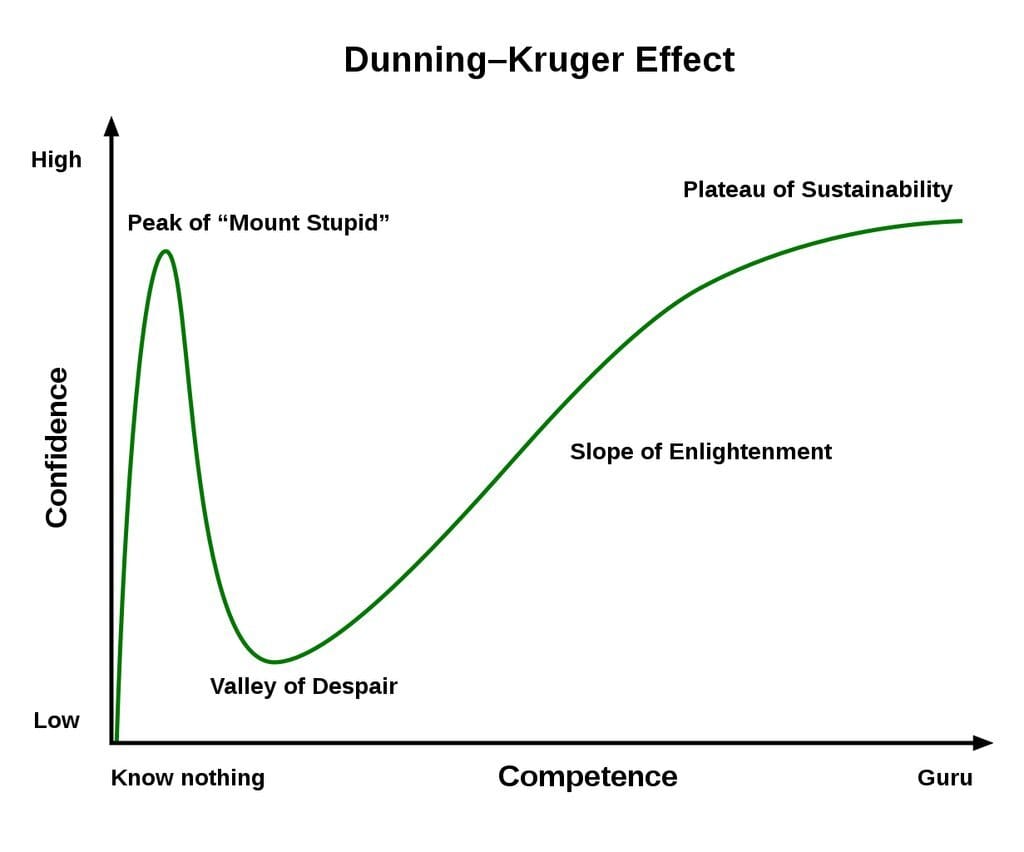
Have you spent years learning and experimenting?
If not, you might be on Mount Stupid
2. Fluctuation of efficiency:
Like any skill, practice makes perfect, and stagnation corrupts.
While most are looking for hacks and tricks, improving on the fundamentals would go a long way.
Example: a
s a creator, it's very easy to overthink the small details like profile optimization, sending DM, auto plugs... but in reality, writing the best content is the most important thing for me.
That is it.
Best content + Distribution = 80/20 of audience building.

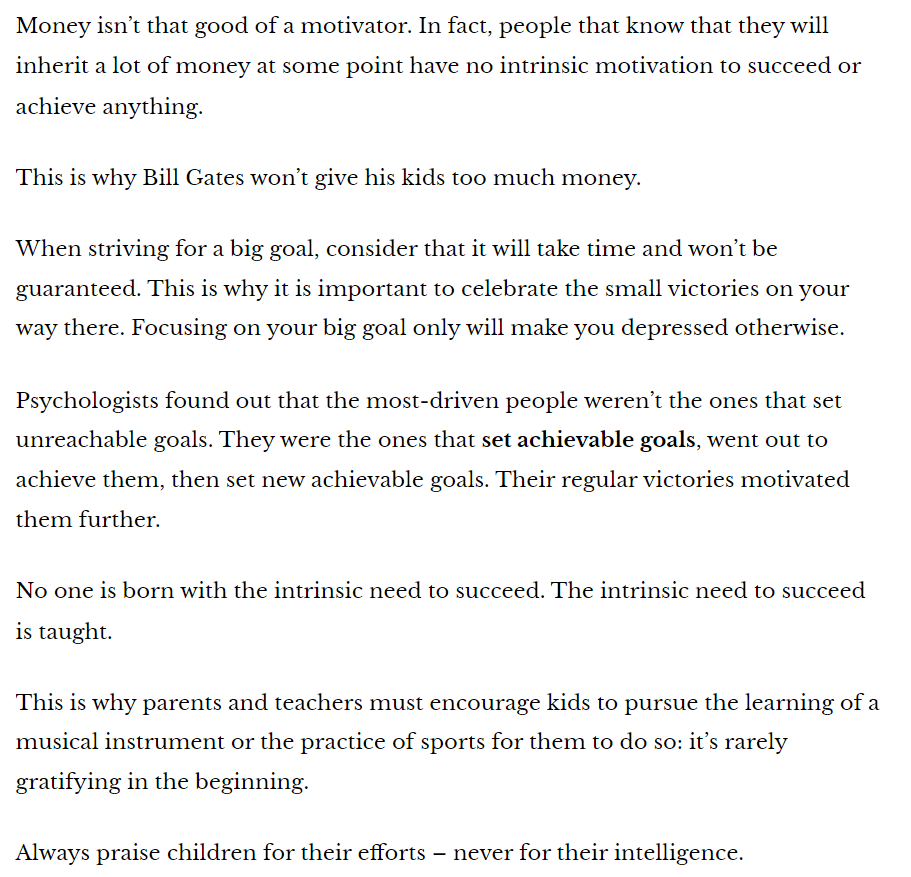
3. A dopamine trigger
As you advance through levels, you get more motivated to get to the finish line -- like in the winning effect.
Winning leads to more wins.
(h/t auresnotes.com)
In most cases, you can intuitively find your level from the description above.
If not, Here are 3 solutions:
Natural time-bound
Fluidity of skill
Confidence
Let me explain:
1. Mastering skills effortlessly: The true definition of mastery.
Theories on the time it takes to excel vary, from Robert Greene's 10,000-hour rule to Josh Kaufman's first 20-hour concept.
But something we can all agree -- practice makes p... no not perfect
Progress
2. Fluidity of skill
Mastery executes skill while in flow.
Quote: “Playing football is very simple, but playing simple football is the hardest thing there is.” -- Football legend Johan Cruyff
Here's a sign of mastery:
3. Confidence
If you are confident in your abilities, you have two chances.
A. You have reached mastery
B. OR You're on Mount Stupid (probably you😉 )
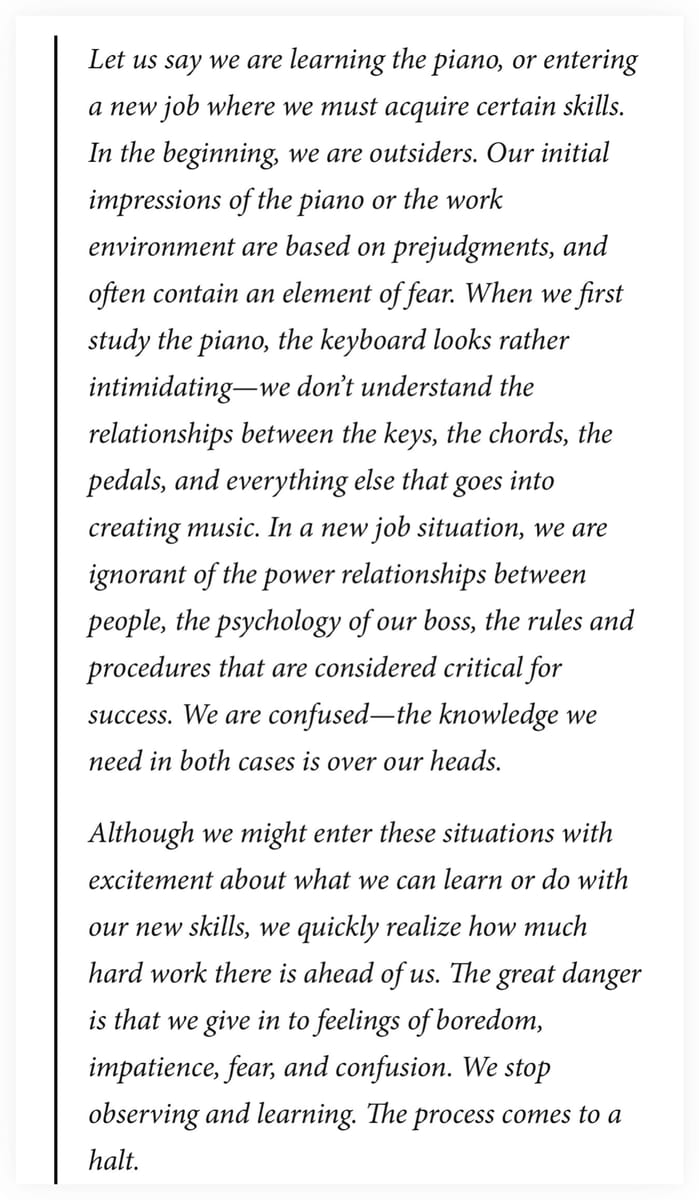
As you go from Unconscious Incompetence to Conscious Competence, you may feel like quitting.
Don't.
I promise it's worth it.
The only way out is through.
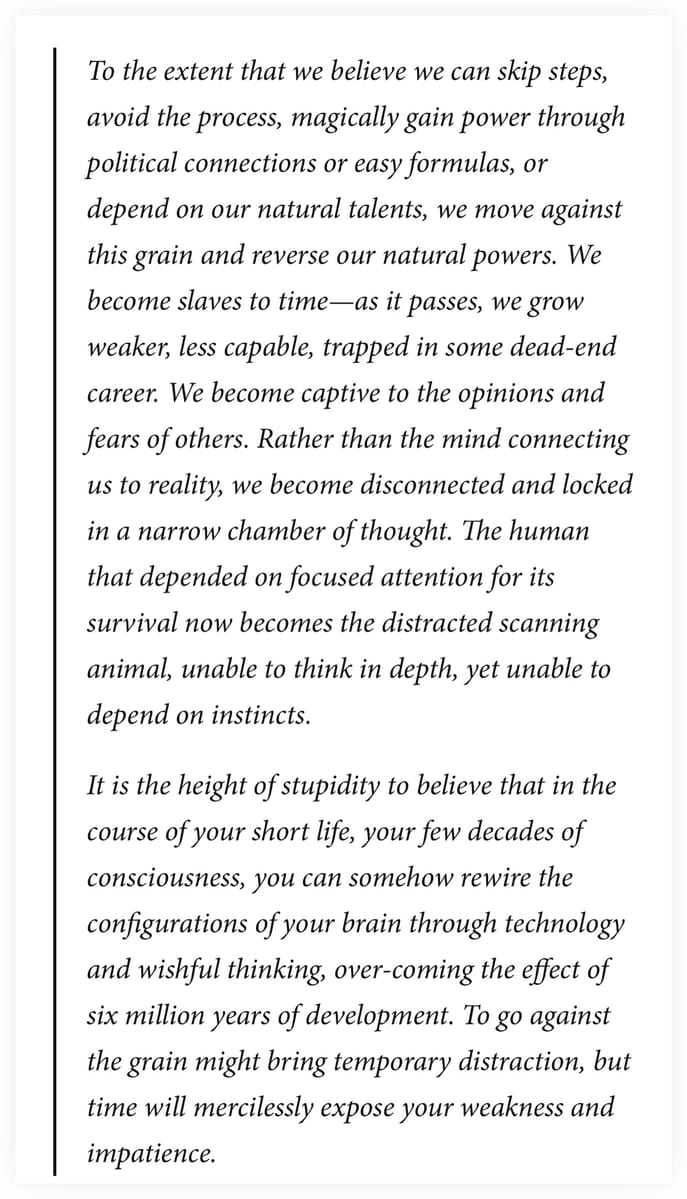
"It is the height of stupidity to believe that in the course of your short life, your few decades of consciousness, you will overcome the effect of six million years of development.”
So how do you advance through the stages?
There are a lot of ways to advance through levels, but here are some you can apply right away:
Higher order thinking
Deliberate practice
Mental representation
Mentorship
Here’s what it means:
1. Higher order thinking
At the peak of mastery, all knowledge are connected. The stronger the connection, the more fluidity and application you get.
The ability to analyze, evaluate, and judge concepts critically determine your level if understanding of the topic.
Example:
If you look at an apple, do you see the fruit, or the trees, origin, farming process, texture? -- That's back-and-forth of Q&As is higher-order thinking.
At the peak of mastery, all knowledge is connected. The stronger the connection, the more fluidity and application you get.
2. Deliberate practice
Practice makes progress.
Deliberate practice makes perfect.
To find the marginal gains, you improve by leaps and bound compare to other.
Before you start specific, slightly difficult, goals that stretch your limit.
Then track the results
Your results reveal patterns of thoughts, environment and other factors for improvement.
Abstract it like reading a research paper.
What do you tend to do?
What are your limiting habits?
What hypotheses can you form?
These are foundational for your new experiments.
If this sounds remotely interesting for you, have a watch at this video:
3. Metal representation
Elite athletes need elite routines.
Michael Phelps's is no different.
After earning 23 gold medals, he has revealed secret ritual that made him the mentally toughest swimmer ever
It's called "Get the videotape ready."
H/t@GregoryMcKeown
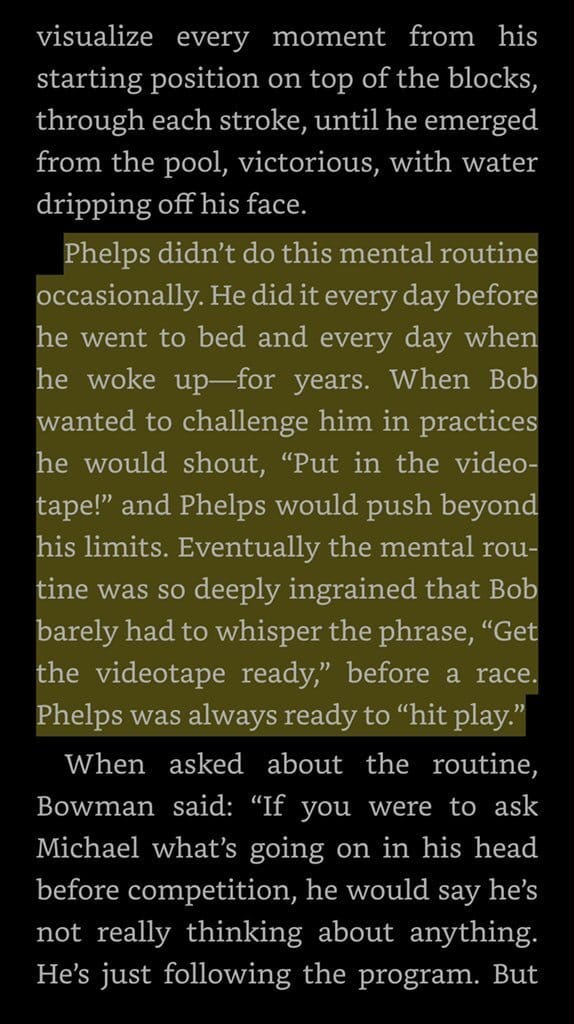
He has run through his routine thousand of times, and whenever needed, he just
"Get the videotape ready."
And you?
What is on your video tape?
If a Netflix crew were going to film a documentary about a day in your life, what would it look like?
That's your tape.
Read more about Michael Phelps video tape here:
For any elite athlete, the key to victory is creating the right routines.
Michael Phelps has a secret ritual that helped him become the mentally toughest swimmer in the world and win 23 gold medals 🥇
It's called "get the videotape ready":
— Arjun Mahadevan (Mr. LLC 🇺🇸) (@ArjunMahadevan)
2:56 PM • Feb 20, 2023
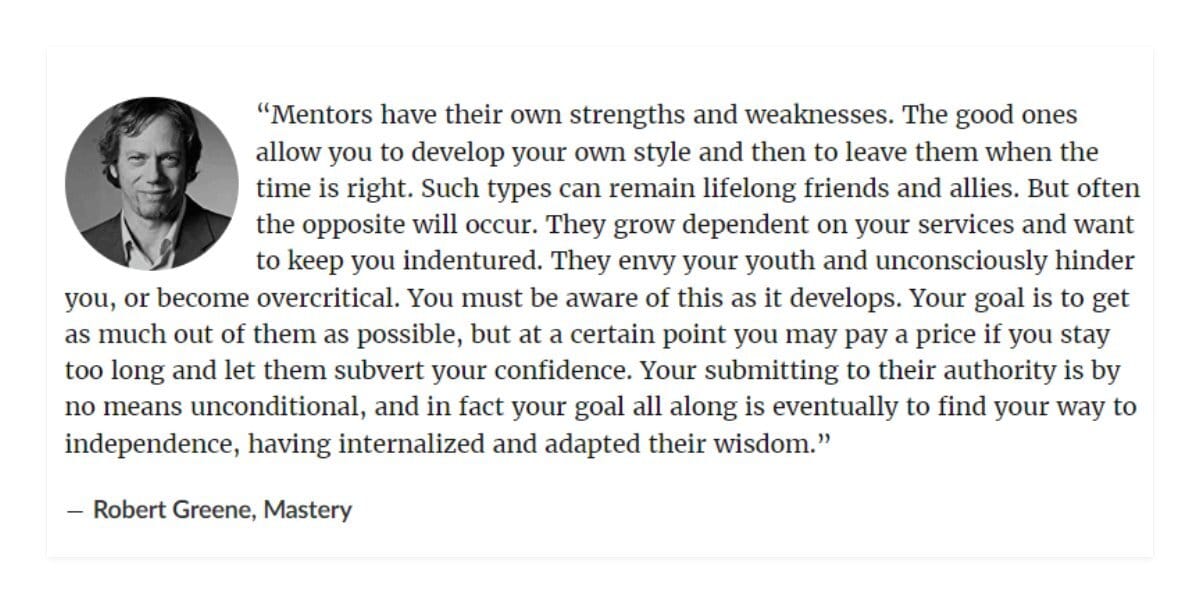
4. Mentorship
Your deepest problems have been solved before.
And now, you can either:
A - Waste time finding it by yourself
B - Cut through the noise with other's experiences.
Once you find them, stick with it, follow the lessons, and stay humble.
References and sources:
@_shortform's summary for Peak, and Mastery.
🎯 Takeaway
Thing one
Thing two
Thing three
🧠 Brain Puzzler
(A question, riddle, or conundrum to mull over )
Find the missing number:

Congratulations to Aditya, who was the first and only person to solve last week’s puzzle.
What word becomes shorter when we add 2 letters to it?
The answer was ”short - er”.
Quickly reply and I will feature you in the next issue
😁 Life Update
Most interesting thing about last week
My life is crazy right now. So many things going on right now, that I haven't have the time to document it with you guys. I feel like the progress of the last 9 months somehow just compound into this gigantic snowball. I am managing three Twitter accounts, becoming a certified learning coach, doing uni all at once.
Things does compound over time. The only thing I can focus on is the process and the input. Some of mmy content went viral in the last few weeks and that helped me crossed 7k.
My plan for the upcoming week
Yeah continue doing what I'm doing making sure everything is going as planned and helping people become better with whatever value I can add.
I am too busy this week to write a detailed newsletter, so hope you are happy with this.
Any other interesting facts
I just got back from a family vacation and now I'm just heading into like full work mode. I hope that I can explode my account in the coming months but yeah it's gonna be really exciting but it's also a lot of hard work.
Because some of you have shared The Learning Lab with your friends or on social media, our newsletter has grown by 13.7% in the last 7 days (100 subs increased).
Please reply back to this email so that I know what you think about this piece.
Answer this question: “What is your biggest struggle when it comes to learning something new?“
And finally, If you think someone might enjoy this newsletter, any forwards would be appreciated 🥰
⚠️ Disclaimer
I am not a learning coach (yet).
I don’t have the perfect system
I haven’t experienced it with students.
I haven’t dived much into the research paper and theories
My techniques are mostly based on my experience and the limited research that I have done.
Please consult with a professional learning coach at Icanstudy for more assistance. 😇