- The Learning Lab
- Posts
- How AI EdTechs brainwash you


Read time: 7 minutes
Welcome back, 1550 readers, to the Learning Lab.
A weekly newsletter that helps you build your learning systems and become lifelong learners.
🧠 Brain Puzzler
(A question, riddle, or conundrum to fire up your brain)
I have branches, but no leaves. I have pages, but no words.
I have spine, but no bones.I tell stories, but have no voice.
What am I?
Congratulations to Chukwudalu Orafu, who was the first and only person to solve last week’s puzzle.
Turn me on my side and I am everything. Cut me in half and I am nothing. What am I?
The answer was ”the number 8”.
Now back to the post!
I used to believe AI would save education.
Grades were dropping, and students were confused; AI was supposed to be the savior.
But after seeing numerous AI edtechs + software, things are about to get much worse for students, education, and society.
Here's why:
My argument is simple.
First, some context about how learning works:
Learning has 2 main parts: representing and processing (encoding + retrieving) information.
AI can help with the representation, but as a result, it may damage students' already poor processing skills.
This piece will explain why and what this implies in the bigger picture of education and society.
Let's step back... what does it mean to process information?
This is the most in-depth part, with 2 crucial points I want to state, so bear with me.
1. Processing occurs when you internalize the concepts and consider their connections and relevancy to build a web of knowledge.
With the Bloom Revised Taxonomy and the SOLO Taxonomy, we understand that higher-order thinking (analyzing, evaluating, and comparing concepts) creates a more connected network of ideas.
Which helps us skip the tedious memorization.

2. Through the Cognitive Load Theory, we understand a clear correlation:
Mental discomfort (struggle, confusion, frustration...) = More engagement = more learning.
3 types of cognitive loads combine to create the estimated load.
Intrinsic load: Complexity of information
Germane Load: The process of learning
Extraneous load: unnecessary distraction
Just like progressive overload in the gym, the optimal zone (desirable difficulty) stretches you just enough, or you'll snap.

(Please correct me if I'm wrong about any of this.)
From these theories and the general trend of students avoiding strategies requiring more effort even though they may increase learning efficiency (misinterpreted effort hypothesis), AI edtechs are making things worse.
3 reasons why:
1. Most EdTechs don’t understand how learning works.
AI reducing the extraneous load is good, but things tend to go wrong when it starts reducing the germane load.
When you skip higher-order thinking and rely on flashcards, rereading, linear notes, etc., you are now studying, not learning.
This results in companies falling into the trap of facilitating the misinterpreted effort hypothesis—taking manual tasks (flashcards, practice questions) and letting AI spam them out.
For example, an AI can create 100 practice questions in 60 seconds.
On the surface, that is attractive.
Still, when we remember that creating the questions is part of the learning, we realize that students skip both the thinking and struggle (you see the problem now?)
2. Conflicted interest on a business level:
I've looked at Instagram + TikTok lately, and the amount of misinformation pushed by AI EdTechs and influencers is insane.
But here's a quick thought experiment:
You see an AI EdTech making crazy promises…
“why are they saying so?"
“Is it because they experimented and found a scientific breakthrough, or are they desperate to get user sign-ups?”
I think if the business has a clear intention to help students and their methods work, scaling is a win-win for everyone.
But the problem is the operational conflict.
When an edtech operates from the standpoint of adding value like a business:
Getting the dream outcome
Showcase the perceived likelihood of achievement
Reduce time delay
Minimize effort and sacrifice
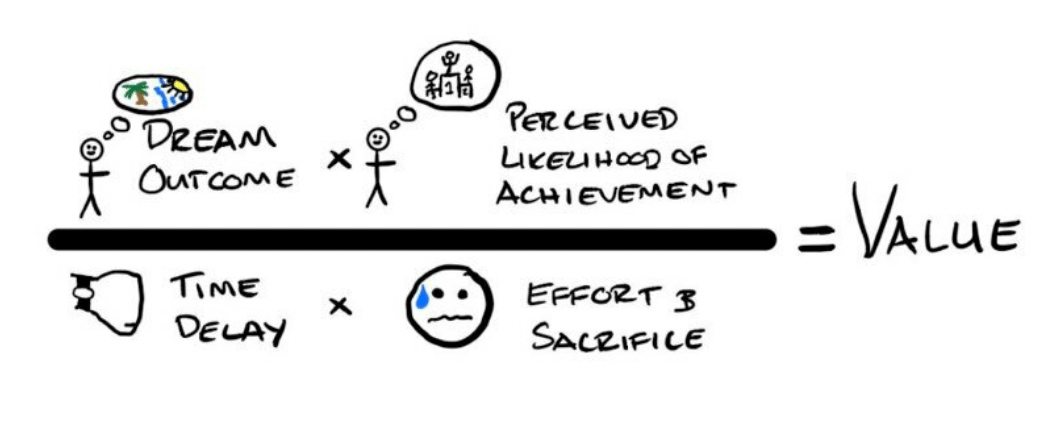
We get something like this:
"We help students get straight As in under 15 minutes per day while spending less time and minimal effort. Here are 10 case studies of other students just like you."
That's a great offer.
But if we give students the reality that:
A single trick won't save you.
You can do it right and still fail.
Struggling is important for learning.
Studying is difficult and time-consuming.
It's very hard to sell anything.
I don't blame the Edtechs. In the end, they have stakeholders to satisfy.
A few committed to helping students will seek consultation from learning experts. However, most will apply them partially or bend the advice because it could be more profitable.
3. AI will widen the gap between smart and curious students and average students.
Let's zoom out into the big picture — school.
Smart students become smarter, and less engaged students will become even worse.
Like human nature, we always choose the path of least resistance.
With education becoming meaningless, students might fall into the AI rabbit hole.
It might just start with:
"AI summarizing my notes couldn't do that much harm, could it? 🤔 "
" AI to research ideas for assignments 🙋 "
and soon enough... the AI has written everything. 😥
And this brings us to an important point:
Even if school admins try to compete with students on any front related to technology, they will F A I L.
For every new Turnitin update, hundreds of new AI writing tools will walk past it.
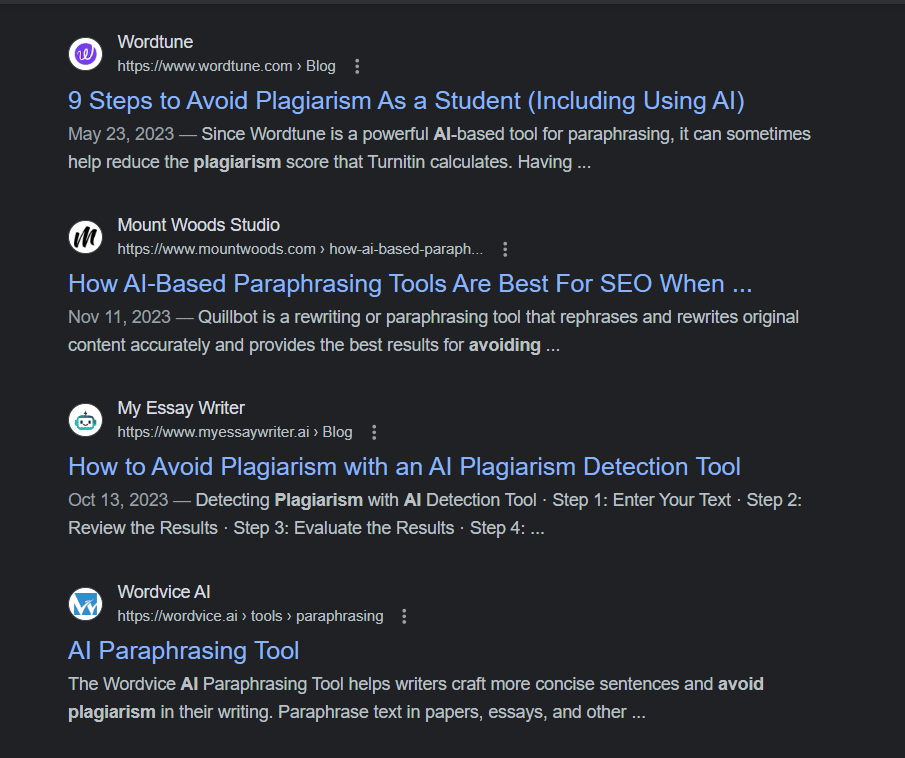
“But like Toan, schools can ban AI and phones as a whole.”
Hardware level: Yes, they can ban the tech.
Software level: We are wired to solve problems. In this case, schoolwork or studying is the problem.
Once the students see an Instagram reel about a new AI that helps them avoid a problem, they would take the bait.
This is like their escape route from the pain (study). And once the intention is there, it's over.
For a much much better explanation, this video by Vox will do justice:
Now let’s imagine this in the bigger picture of fast-forwarding 10 or 15 years.
Some of those high schoolers are now surgeons, lawyers, and accountants—people with power and responsibilities.
They finished 4+ years of schooling without basic knowledge of anything while being $100k+ in debt.
Another 10 or 15 years later, and some will be decision-makers who impact the lives of millions. At that point, some say we might already be like cyborgs and don't need basic facts, but that dependence will worsen us.

I don't know what that future looks like, but with inverted thinking, it seems like it could be better.
But now, back to the present...
I am NOT saying to ban AI from schools; that's a losing game.
It's about changing how we teach and examine so that AI becomes the foundation and lets us focus on thinking & learning.
I won't dive into it here, as I feel the piece is already too long 😅
But here's one hypothetical solution.
Like Buffet would solve the debt ceiling problem in 5 minutes, people in power need more skin in the game.
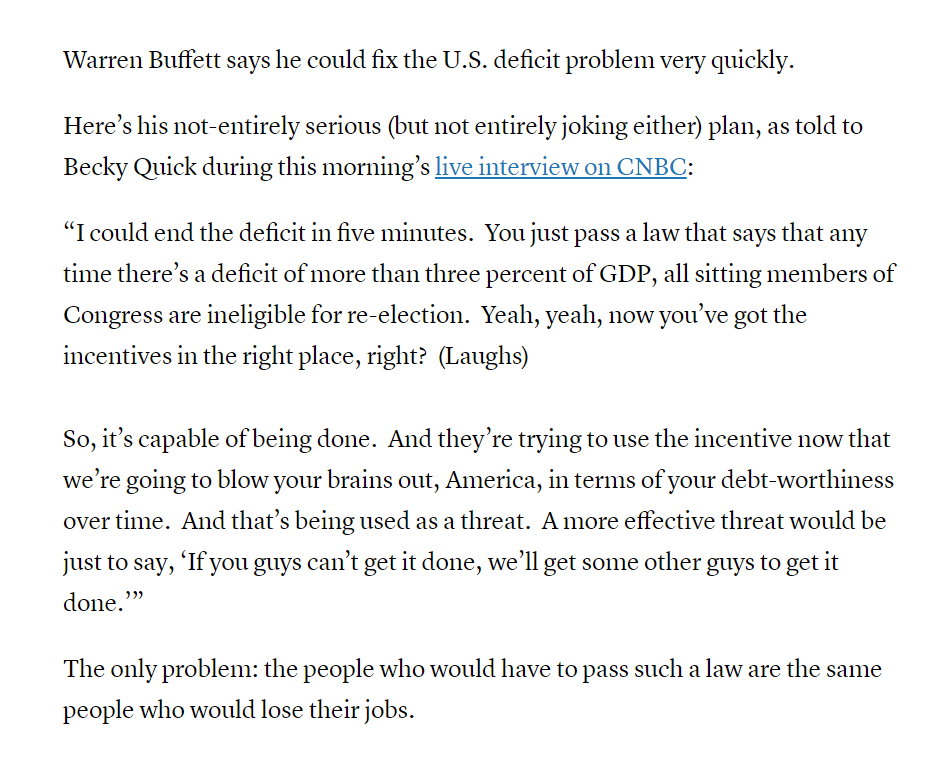
AI EdTechs need accountability for their claims.
There should be an independent organization operated by learning science experts who would verify the claims of the EdTechs. Under scrutiny, if the business can't submit a report on learning or research to back up its claim, it would go into the "wall of shame."
"There should be an independent organization, operated by learning science experts who could verify the claims of the EdTechs. Under scrutiny, if the business can't submit the Report On Learning or research to back up its claim, it would go into the "wall of shame."
The site will be available online, and they will have a media team to call people out, making it a trusted source for the public.

Like the Community Notes on X, we need moderators who call out the BS.
At first, Edtech would get a warning, but if repeated, we would publish public articles and social media posts about them.
FYI, this will never happen. Maybe I should start this one day 😅
For now, I hope students, educators, and EdTech people find this post useful and it slightly changes the way they operate in their day-to-day lives.
AI can do great things for humanity, and the future is bright. If it's not, I will make it bright.
Share this piece with your friends if you want to spread the word.
And feel free to share your thoughts below.
🧬 Toan’s Life Update
I hope you enjoyed this piece. This week has been great so far, starting off really strong and just getting back into the rhythm of putting in the work and getting things done. I am making some decent progress with the ICanStudy course, and I am so glad that I took the time to go back and slow down.
An AI course creation startup I was working with before is now making great progress, and I am just really grateful to help them out. Finally, I am just really happy to write this piece and finally hit the post. Some might say I have been procrastinating on this 🤭
Continue mastering the fundamentals and building on what I am doing right now. The newsletter you are reading now will go out on X in a few days. I hope it will perform well, but who knows?
More interesting threads and long posts are coming out in 2024, and I will be back with some updates.
Thank you! I hope you have an amazing 2024.
Toan Truong.
⚠️ Disclaimer
I am not a learning coach (yet). My techniques are mostly based on my experience and the research that I have done. Please be conscious while applying these methods.